
1.31 Joe Walsh: “To my fellow Democrats, call him a fascist. He IS a fascist. Don’t be afraid to call him that. He’s using our Justice Department to go after his political enemies. He’s detaining & disappearing people without due process. And now he’s arresting journalists. He’s a fascist. Call him that. Don’t be afraid.”
1.30 Don Lemon arrested. Jane Fonda: “They arrested the wrong Don.”
1.30 Catherine O’Hara dies at 71.
1.28 Tim Walz, interviewed in The Atlantic: “I mean, is this a Fort Sumter? It’s a physical assault. It’s an armed force that’s assaulting, that’s killing my constituents, my citizens.”
1.28 Adam Serwer in The Atlantic: “The secret fear of the morally depraved is that virtue is actually common, and that they’re the ones who are alone. In Minnesota, all of the ideological cornerstones of MAGA have been proved false at once. Minnesotans, not the armed thugs of ICE and the Border Patrol, are brave. Minnesotans have shown that their community is socially cohesive—because of its diversity and not in spite of it. Minnesotans have found and loved one another in a world atomized by social media, where empty men have tried to fill their lonely soul with lies about their own inherent superiority. Minnesotans have preserved everything worthwhile about “Western civilization,” while armed brutes try to tear it down by force. No matter how many more armed men Trump sends to impose his will on the people of Minnesota, all he can do is accentuate their valor. No application of armed violence can make the men with guns as heroic as the people who choose to stand in their path with empty hands in defense of their neighbors. These agents, and the president who sent them, are no one’s heroes, no one’s saviors—just men with guns who have to hide their faces to shoot a mom in the face, and a nurse in the back.”
1.27 At a town meeting, Rep. Ilian Omar is sprayed by hostile constituent. Trump, when asked if he had seen video of the attack: “No. I don’t think about her. I think she’s a fraud. I really don’t think about that. She probably had herself sprayed, knowing her. . . I haven’t seen it. No, no. I hope I don’t have to bother.”
1.27 Statement from Representatives Hakeem Jeffries, Katherine Clark and Pete Aguilar: “Kristi Noem should be fired immediately, or we will commence impeachment proceedings in the House of Representatives. We can do this the easy way or the hard way.”
1.27 George Will in the Washington Post: “Minneapolis is today’s Birmingham.”
1.26 Jeffrey Blehar at the National Review: “Any hope of Trump’s presidency clawing its way out of the hole it has dug for itself begins with firing Kristi Noem, current secretary of homeland security and the administration’s most prominent “ridealong disaster” during its first year. Preferably out of a rocket, and into the sun. Damage control is needed, and she is the most visible avatar of damage.”
1.26 Produce Pete dies at 80.
1.25 Supreme Court Justice Robert Jackson: “Authority here is to be controlled by public opinion, not public opinion by authority.”
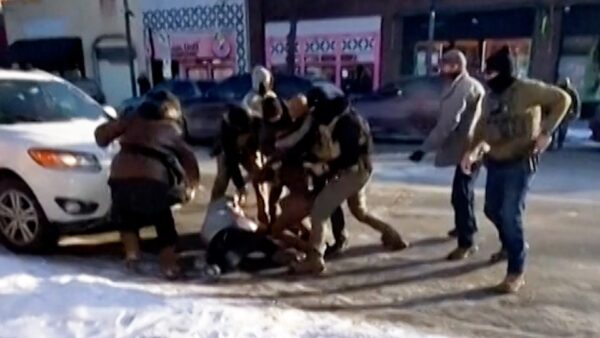 1.24 Alex Pretti, a 37 year-old VA nurse, was shot ten times by the Border Patrol outside a donut shop in Minneapolis. Though he carried a licensed firearm, the agents had stripped him of the firearm before shooting him. Jim VandeHei and Mike Allen in Axios: “This is the definition of a war by choice. Trump chose to use ICE to expand immigration enforcement beyond clear-cut violent criminals. He chose to recruit new ICE agents and rush their training. He chose to target Minnesota, then chose again and again to escalate. He chose to downplay incidents where ICE beat or killed U.S. citizens. He chose to let top officials make unverified accusations that contradict reality.”
1.24 The Atlantic: “In August, the FBI released its final data for 2024, which showed that America’s violent-crime rate fell to its lowest level since 1969, led by a nearly 15 percent decrease in homicide—the steepest annual drop ever recorded. Preliminary 2025 numbers look even better. The crime analyst Jeff Asher has concluded that the national murder rate through October 2025 fell by almost 20 percent—and all other major crimes declined as well. The post-pandemic crime wave has receded, and then some. According to Asher’s analysis, Detroit, San Francisco, Chicago, Newark, and a handful of other big cities recorded their lowest murder rates since the 1950s and ’60s. “Our cities are as safe as they’ve ever been in the history of the country,” said Patrick Sharkey, a sociologist at Princeton who studies urban violence.”
1.23 Uncle Floyd dies at 73.
1.23 A YouGov survey finds that 59% of Americans finished at least one book last year; 40% didn’t read any; 27% read just 1–4; and 19% read 10+ books. This small minority accounts for 82% of all books read in the U.S.
1.22 Jack Smith testifies before the House Judiciary Committee: “[T]he rule of law is not self-executing—it depends on our collective commitment to apply it. It requires dedicated service on behalf of others, especially when that service is difficult and comes with costs. Our willingness to pay those costs is what tests and defines our commitment to the rule of law and to this wonderful country.”
1.22 John Bolton: “In one day, we went from what some doomsayers in Europe were saying was the most consequential meeting on the future of the West in recent history to Trump backing off of his two biggest threats. And so I hope the lesson that people learn out of this is Trump plays these things by the seat of his pants. There’s no grand strategy at work here.”
1.22 Trump launches the Board of Peace. Members include Vladimir Putin, Viktor Orban, Mohammed bin Salman. Recep Tayyip Erdoğan, Alexander Lukashenko and Benjamin Netanyahu.
1.21 Trump said he has “formed the framework of a future deal” on Greenland, back off tariff increases.
1.21 At Davos, an exhausted, meandering Trump insults France, the UK, Somalia, Switzerland, Canada and other countries. “Without us right now, you’d all be speaking German– and a little Japanese,” he said.
1.20 Mark Carney at Davos: “I will talk today about the breaking of the world order, the end of a pleasant fiction and the beginning of a brutal reality where the geopolitics of the great powers is not subject to any constraint. Every day we’re reminded that we live in an era of great-power rivalry,” he said. “That the rules-based order is fading. That the strong can do what they can, and the weak must suffer what they must. Let me be direct: We are in the midst of a rupture, not a transition.”
1.20 European Commission President Ursula von der Leyen: “The shift in the international order is not only seismic — it is permanent.”
1.20 National Constitution Center, “The Lost Founder: James Wilson and the Forgotten Fight for a People’s Constitution”, with William Ewald and Jesse Wegman.
1.20 John Harbaugh: “The number one thing is we have to have guys that love football. You just have to. It’s football. What are we here for? What do we do? What is this building for? It’s for football. This is a football team. We need guys that love everything about football. They love the games. They love the practices. They love the weightlifting. They love the meetings. They love the dining hall. They love every part of football. If you love football, you’re going to want to be here. . . . because you’re going to be around a bunch of guys that love what you love. They love football, because that’s what we’re going to be doing, football, all the time, every day.”
1.19 George Will in the Washington Post: “He is an almost inexpressibly sad specimen. It must be misery to awaken to another day of being Donald Trump. He seems to have as many friends as his pluperfect self-centeredness allows, and as he has earned in an entirely transactional life. His historical ignorance deprives him of the satisfaction of working in a house where much magnificent history has been made. His childlike ignorance — preserved by a lifetime of single-minded self-promotion — concerning governance and economics guarantees that whenever he must interact with experienced and accomplished people, he is as bewildered as a kindergartener at a seminar on string theory.”
1.19 Cory Doctorow in The Guardian: “The collapse of the AI bubble is going to be ugly. Seven AI companies currently account for more than a third of the stock market, and they endlessly pass around the same $100bn IOU. AI is the asbestos in the walls of our technological society, stuffed there with wild abandon by a finance sector and tech monopolists run amok. We will be excavating it for a generation or more. To pop the bubble, we have to hammer on the forces that created the bubble: the myth that AI can do your job, especially if you get high wages that your boss can claw back; the understanding that growth companies need a succession of ever more outlandish bubbles to stay alive; the fact that workers and the public they serve are on one side of this fight, and bosses and their investors are on the other side. Because the AI bubble really is very bad news, it’s worth fighting seriously, and a serious fight against AI strikes at its roots: the material factors fueling the hundreds of billions in wasted capital that are being spent to put us all on the breadline and fill all our walls with hi-tech asbestos.”
1.19 Rod Dreher in The Free Press: “I voted for Donald Trump in 2020, and after moving to Hungary in 2022, I supported his election in 2024 from abroad. I also agree with Donald Trump that it is strategically important for the United States to acquire Greenland. But with his latest bid to use tariffs to extort Europe into selling Greenland to America, Trump seems to have lost his mind. This past weekend, Trump declared that he will punish eight European countries with 10 percent tariffs until Denmark surrenders Greenland to the United States. He then tied his Greenland pique to his failure to receive the Nobel Peace Prize. The mind reels at the insanity of an American president acting with such petulance. He’s an Outer Borough Julius Caesar, the Don(ald) Corleone of Pennsylvania Avenue.”
1.19 A letter Trump sent to Norwegian Prime Minister Jonas Gahr Støre: “Dear Jonas: Considering your Country decided not to give me the Nobel Peace Prize for having stopped 8 Wars PLUS, I no longer feel an obligation to think purely of Peace, although it will always be predominant, but can now think about what is good and proper for the United States of America. Denmark cannot protect that land from Russia or China, and why do they have a “right of ownership” anyway? There are no written documents, it’s only that a boat landed there hundreds of years ago, but we had boats landing there, also. I have done more for NATO than any other person since its founding, and now, NATO should do something for the United States. The World is not secure unless we have Complete and Total Control of Greenland. Thank you! President DJT”
1.17 Trump says he would impose 10% tariffs on eight NATO countries—Denmark, Denmark, Norway, Sweden, France, Germany, the United Kingdom, the Netherlands and Finland—that sent military troops to Greenland amid his threats to take over the Danish territory. The tariffs would take effect Feb. 1 and increase to 25% in June if Denmark didn’t cede control of Greenland to the U.S.
1.17 Bruce Springsteen, at a show in New Jersey: “[I]f you believe in democracy, in liberty … if you believe that truth still matters, and that it’s worth speaking out, and it’s worth fighting for … if you believe in the power of the law and that no one stands above it … if you stand against heavily armed masked federal troops invading American cities, and using Gestapo tactics against our fellow citizens … if you believe you don’t deserve to be murdered for exercising your American right to protest … then send a message to this President. And as the Mayor of that city has said, ICE should get the fuck out of Minneapolis. So this one is for you, and the memory of the mother of three and American citizen Renee Good.”
1.17 Ross Douthat in the Times: “Trump is abnormal in a million ways, but demolitions are a regular feature of American politics. Political coalitions come and go; alliances and clusters of ideas outlive their usefulness; time and chance happen to us all. The Whigs and the Mugwumps and the Progressives all had their day and departed. No one should be surprised if the movement that William F. Buckley Jr. and Barry Goldwater forged and Ronald Reagan brought to power is giving way to a quite different mode of right-wing politics. But we’re in an odd position because the new mode can be defined only broadly; the specifics are so tightly bound to the whims and charisma of one man that it’s hard to visualize exactly what shape it will take when he’s no longer the president. It’s not that Trump alone is the decider, since the overall process of destruction and renovation is linked to the deeper forces that have made nationalism potent the world over. Against that backdrop, we can predict that a nationalist right will be more intensely focused on American interests in foreign policy, less internationalist and idealistic than prior incarnations of conservatism. We can assume that it will be more open to government interventions in the economy than the laissez-faire or libertarian style of right-wing politics. We can take for granted that it will be more concerned with issues of immigration and national identity and less engaged with the cultural issues that motivated the religious right. And we can expect it to be more radical — more reactionary in some ways, more futurist in others than — than the Burkean conservatism it has seemingly displaced. But within that broad outline a great many things are up for grabs. And because Trump is such a volatile figure, so determined not to bind himself to any permanent commitment, he’s presiding over a transformation that will remain inherently unsettled and incomplete as long as he’s in charge.”
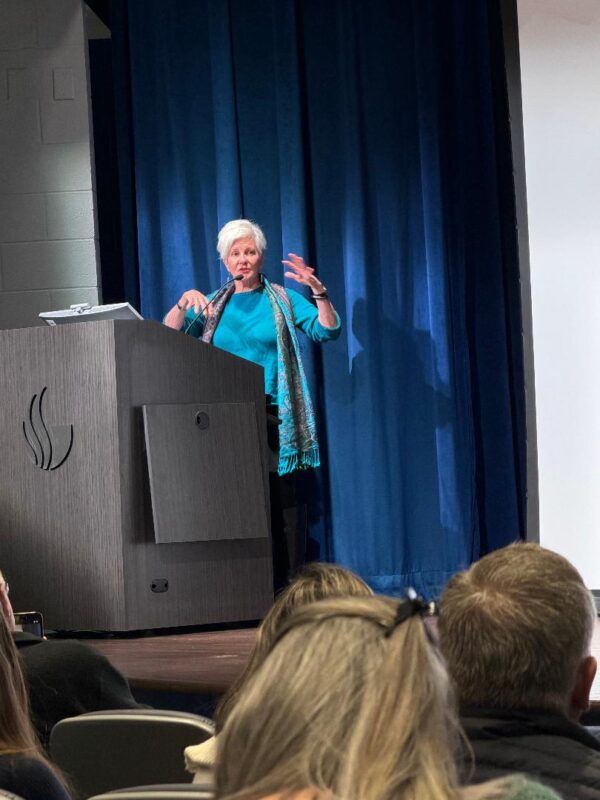 1.17 Atlanta Writers Club. Heard Kelly Beard speak about memoir writing.
1.15 Elliot Ackerman in The Free Press: “[S]omething concerns me about the American way of war as it exists today, in 2026. Every war the United States has fought since its inception has had a construct to sustain it, broadly speaking. I mean, in blood and treasure. How are we going to pay for the war? And who’s going to fight it? In the Civil War, the blood was the first-ever draft we had in this country, to sustain the war. The treasure was actually the first-ever income tax in this country. World War II? It was bond drives and a national mobilization. Vietnam? The construct was a draft that was very unpopular, which led to an anti-war movement that ended the war. In the current iteration, since 9/11, the contract was: The blood comes from our all-volunteer military, and the treasure comes from deficit spending. So there was no war tax. And the result of that construct is that the American people, up to the present day, have largely been insulated from the costs of war. War is not existential for us. It’s not painful. It’s not hugely disruptive to our lives. And the challenge that construct presents is that it makes it very easy for the U.S. to go to war. We just think, Well, this is going to happen. It’s not going to affect us at all, and we maybe only see the upside. But the challenge is that when you roll the iron dice of war, the enemy always gets a vote. And I feel that construct makes us particularly susceptible to stumbling into a war we don’t want to fight, one that becomes incredibly disruptive to our society. And I think that psychology really puts us in peril today, and quite possibly puts us in a position of moral hazard as a nation as we think about war.”
1.15 U.S. District Judge William Young decried what he said were “breathtaking” constitutional violations by senior Trump administration officials. Young leveled the searing critique during a hearing in Boston to determine the appropriate remedies for the administration’s detentions of pro-Palestinian students last year. The judge had ruled in September that senior administration officials engaged in an illegal effort to arrest and deport noncitizen students based on their activism. “Talking straight here,” he said. “The big problem in this case is that the Cabinet secretaries and, ostensibly, the president of the United States, are not honoring the First Amendment.” Homeland Security Secretary Kristi L. Noem and Secretary of State Marco Rubio engaged in an “unconstitutional conspiracy” to deprive people of their rights. “These Cabinet secretaries have failed in their sworn duty to uphold the Constitution,” Young added. “The secretary of state, the senior Cabinet officer in our history, is involved in this.”
1.15 George Will in The Washington Post: “In the 2006, 2010, 2018 and 2022 off-year elections, voters ended an arrangement that they frequently forget is usually unfortunate: the president’s party controlling both houses of Congress. Now, after 12 months with a president unconstrained by his party’s supine congressional majorities, chastened voters might, come November, restore a semblance of checks and balances: divided government. Party loyalty now eclipses legislators’ institutional pride. So, only divided government can make its Madisonian architecture — the separation of powers; what writer Yuval Levin calls “the deliberate recalcitrance of our system of government” — work.”
1.14 Thomas B. Edsall in the Times: “Trump is showing symptoms of an addiction to power, evident in his compulsion to escalate claims of dominion over domestic and international adversaries. The size and scope of his targets for subjugation are spiraling ever upward.”
1.14 Paul Krugman: “The US has not replicated Hungary’s measured slide into authoritarianism. For Trump and his minions aren’t patient. They want retribution and subjugation. Threats and dominance displays are how they operate. They burn with racism, misogyny, and performative cruelty. So now we have Minneapolis, America’s laboratory of democratic destruction, where ICE agents have gone full Sturmabteilung, terrorizing and even killing not only people with brown skin, but anyone who protests or gets in their way. And the irony is that this may be for the better. For a gradual destruction of democracy would have been hard to resist. After all, who wants to rock the boat when there’s money to be made, jobs to keep, perks to be had, convenient bothsideism to be upheld, if you will just be silent and keep your head down? Instead, however, the assault on freedom and civil liberties is open, lurid, and impossible to deny. While our institutions and our elites have failed us, ordinary Americans are rising to the occasion. If Minneapolis is a laboratory of democratic destruction, it has also become a laboratory of civil resistance — organized civil resistance, of a kind we haven’t seen since the civil rights movement. When ICE is on the rampage, crowds of brave Americans, summoned by texts and whistles, quickly gather to stand against the masked men with guns. As the outrage grows, people of common decency — like the federal prosecutors in Minnesota who chose to resign rather than pervert justice by going after Renee Nicole Good’s wife — are taking a stand. So what’s happening now is both horrifying and inspiring. How will it all end? I don’t know, but maybe, just maybe, our democracy isn’t being destroyed — it’s being forged anew in the hands of the American people.”
1.13 Joe Rogan: “You don’t want militarized people in the streets just roaming around, snatching up people — many of which turn out to be US citizens that just don’t have their papers on them. Are we really gonna be the Gestapo, ‘Where’s your papers?’ Is that what we’ve come to?”
1.13 After 19 seasons, Mike Tomlin steps down as Steelers coach.
1.13 Max Boot in The Washington Post: “Trump is trapped in a Gilded Age bubble where tariffs are good and imperial resource grabs are even better. But imperial adventures often went awry in the past; for example, the U.S. annexation of the Philippines sparked an armed uprising that took years (and 126,000 U.S. troops) to put down. The risks of miscalculation loom anew today. If Trump tries to acquire Greenland, the move could destroy NATO. If he keeps extorting Venezuela, it could lead to anti-American uprisings across Latin America. If he orders further military forays, they could result in U.S. fatalities — as the Maduro operation almost did. Why risk it? America is self-sufficient in oil and doesn’t need Venezuela’s. Denmark already allows the U.S. to pursue its economic and security interests in Greenland; no “ownership” needed. . . .[T]he Monroe Doctrine, which Trump often cites, was a rebuke of European imperialism in Latin America, not a mandate for U.S. micromanagement. By turning the Monroe Doctrine on its head, Trump is squandering America’s moral capital — and inviting a global backlash against his avaricious overreach.”
1.13 The U.S.-based Human Rights Activists News Agency estimates that more than 2,000 protesters have been killed by Iranian security forces since the demonstrations began last month.
1.12 Elizabeth Warren at the National Press Club: “[T]here is a . . .group of extremely wealthy people trying to influence policy. This group might align with the Democrats on some social issues. They certainly are not MAGA Republicans. But they’re also not interested in changing an economic game that is already rigged in their favor. In exchange for their financial support, they insist that the Democratic Party turn its economic agenda in a direction that mostly benefits the wealthy and further undermines the economic stability of tens of millions of families all across this country. These people push Democrats to embrace candidates who will slow-walk popular economic policies. They lobby for deregulation and special tax breaks that will pad their own bottom lines. They promote making big-time corporate lawyers federal judges. They pressure presidents to appoint tepid leaders at regulatory agencies—people who, once in office, seem positively allergic to enforcing the law when that might make life uncomfortable for big business interests. In their effort to shape the Democratic agenda, the ultra-wealthy wield outsized power. And we all know why. Rich people can fund super PACs to prop up political campaigns for their chosen candidates. They can fund their own lobbying efforts. They can build or simply buy whole media empires in order to bend the news to their liking. And, as we’re seeing right now with AI and crypto, they can try to crush anyone who gets in the way of their business interests. Over the past generation, the wealthy have avoided accountability time and again. Regular Americans must play by every rule or face real consequences. You don’t need to read every news article about Jeffrey Epstein and his good buddies like Larry Summers and Donald Trump to understand how consistently rich and powerful insiders protect each other, regardless of politics and regardless of how obscene the situation has become. The Epstein scandal is real and enormous, but the slew of white-collar pardons issued in recent months by President Trump reflects the same the-rules-only-apply-to-someone-else mentality that pervades Washington. So how does this affect winning elections? After the 2024 election, pundits sliced and diced demographic groups—across race, age, religion, and geography—to show how Democrats need to grow our coalition in order to win again. Yes, we need support from rural voters, men, and voters without a college degree. And yes, in 2025 we won back some of those folks, partly because Democratic candidates from every wing of the party ran against Trump’s betrayal of working people on affordability issues. But in the long run, to build a strong Democratic party with a sturdy big tent, it is not enough to simply attack Trump. Democrats need to earn trust—long-term, durable trust—across the electorate. Trust that we actually understand what’s broken, and trust that we have the courage to fix it—even when that means taking on the wealthy and well-connected.”
1.12 David Frum in The Atlantic: “[ICE] happens to have a particularly grim record of violent overreactions. According to The Trace, which tracks gun violence generally, Renee Good was one of four people who have been killed by ICE since the crackdown began in June, and the organization has identified more than 30 incidents in which immigration agents have either opened fire or held someone at gunpoint. Border Patrol agents have also shot at least three people who were simply observing or documenting immigration raids, including a 30-year-old American woman in Chicago, at whom an agent shouted “Do something, bitch” before opening fire with an assault rifle. She was hit five times but somehow survived. This count doesn’t include the many reported incidents of physical assaults without guns, such as choking and body slams, including of elderly men and women. More and worse scenes have been recorded in Minnesota this past weekend. ICE is violence-prone in part because the agency has lowered its training standards and ditched much of its background vetting to meet the president’s grandiose deportation targets. But more fundamentally, ICE is violence-prone because its main purpose has become theatrical. Under present leadership, ICE is less a law-enforcement agency than it is a content creator.”
1.12 Lucian K. Truscott IV: “It’s tempting to say that the Trump administration, in the name of enforcing immigration laws, is waging a war on citizens. But it’s not all citizens of America. It’s only those in blue states like Minnesota and Oregon and Illinois and California. Trump is the first person in the 250-year history of this country who doesn’t believe he was elected to be president of all the people. He says, and he acts, as if he is the president of those who voted for him. Everyone else, such as the people of Minneapolis, Minnesota, are enemies. They may as well be living in Iran or Venezuela, or be riding in open boats with multiple outboard motors racing through the Caribbean Sea. It’s open season on everyone who didn’t vote for Donald Trump, especially those who are showing up on the street to protest ICE efforts to arrest and deport undocumented immigrants…. If we wondered what a civil war would look like when it happened in this country, we have our answer. We are being forced under tax laws that apply to all of us to pay for a uniformed, armed, masked army that is rounding up our friends and neighbors, and when we exercise our rights under the First Amendment in protest, they are beating and arresting and killing us.”
1.11 Jerome Powell: “I have deep respect for the rule of law and for accountability in our democracy. No one—certainly not the chair of the Federal Reserve—is above the law. But this unprecedented action should be seen in the broader context of the administration’s threats and ongoing pressure. This new threat is not about my testimony last June or about the renovation of the Federal Reserve buildings. It is not about Congress’s oversight role; the Fed through testimony and other public disclosures made every effort to keep Congress informed about the renovation project. Those are pretexts. The threat of criminal charges is a consequence of the Federal Reserve setting interest rates based on our best assessment of what will serve the public, rather than following the preferences of the President. This is about whether the Fed will be able to continue to set interest rates based on evidence and economic conditions—or whether instead monetary policy will be directed by political pressure or intimidation.”
1.11 David French in the Times: “Trump isn’t a responsible leader, and he’s at his absolute worst in a crisis. He lies. He inflames his base. And — most dangerous of all — he pits the federal government against states and cities, treating them not as partners in constitutional governance but as hostile inferiors that must be brought to heel. That’s exactly what has happened in the hours and days since an ICE agent  shot and killed Renee Good on the streets of Minneapolis. Instantly, the administration’s narrative locked in. In a Truth Social post published mere hours after Good’s death, Trump said that Good “violently, willfully, and viciously ran over the ICE Officer, who seems to have shot her in self defense.” He said that it was “hard to believe” that the ICE agent (who was recorded walking around after the incident, apparently unharmed) was alive. Statements from senior administration officials were even worse. Kristi Noem said that Good committed an act of “domestic terrorism.” Tricia McLaughlin, the assistant secretary for public affairs at the Department of Homeland Security, referred to Good as a violent rioter and said she “weaponized her vehicle, attempting to run over our law enforcement officers in an attempt to kill them — an act of domestic terrorism.” Not to be outdone, Vice President JD Vance called the incident “classic terrorism.” But if you watch videos, one thing is clear: No fair-minded person could watch that incident and conclude that Good was a “domestic terrorist” on a mission to run down ICE agents. The administration’s claims of terrorism are false — absurdly so.”
1.10 Axios reports that Steve Bannon is laying the groundwork for a 2028 run for president. Though not serious about becoming president, he’s told allies he wants to shape the debate and pressure  Republican candidates to embrace an “America First” agenda — including a non-interventionist foreign policy, economic populism and opposition to Big Tech. Matt Gaetz said: “The Bannon campaign will merge the foreign policy of Rand Paul with the tax policy of Elizabeth Warren.”
1.10 Bob Weir dies at 78. We saw him perform at the Outlaw Festival in Saratoga Springs in September 2023.
1.10 Gal Beckerman in The Atlantic: “Jefferson agreed with Hobbes’s main contention: Government is necessary to organize human behavior. But he thought that leaders had to do a lot more than just prevent brutality and chaos. A Lockean, Jefferson had a more expansive view of human needs and capabilities. He felt that the “principle of Hobbes” was lacking because it didn’t take into account that humans have a “moral sense.” People want more than just a life without fear, he said; “every human mind feels pleasure in doing good to another.” Any worthy American government needed to reflect this instinct toward goodness, and to create the conditions for it. This also happens to be the only way to summon the kind of “real world” that someone would actually want to live in.
1.9 Tucker Carlson: “Did we disagree with her views on immigration? Probably. But that shouldn’t matter. Her death is a tragedy, regardless of her partisan affiliations, ideological beliefs, or who pulled the trigger. A woman got shot in the face. How come so few conservatives are viewing this story through a human lens?”
1.9 George Will in The Washington Post: “Given Trump’s gargantuan exercises of executive discretion regarding great matters of state, it might seem quaint to wonder why he cannot be stopped from treating Washington as his chew toy. This would be unworthy of our nation if he had exquisite taste. The fact that he revels in being a vulgarian takes a toll on the nation’s soul.”
1.9 At a meeting at the White House, Darren Woods, the CEO of ExxonMobil told Trump that Venezuela is “uninvestable.” He said that “significant changes have to be made to those commercial frameworks, the legal system, there has to be durable investment protections,” and there needs to be a rewrite of the laws governing oil production in Venezuela.
1.8 Asked by The New York Times if there were any limits on his  global powers, Trump said: “Yeah, there is one thing. My own morality. My own mind. It’s the only thing that can stop me.”
1.7 Mayor Jacob Frey: “ICE, get the fuck out of Minneapolis.”
1.7 Renee Nicole Good, a 37 year mother, is shot to death in her car by an ICE agent in Minnesota.
1.6 Jamelle Bouie in the New York Times: “[T]here is a sickness eating away at American democracy, it is our culture of elite impunity. Trump is at once a symptom of this disease and its apotheosis, a living representation of all the ways the United States has encouraged, tolerated and rewarded the most selfish and antisocial behaviors imaginable, at least among a certain class of person. And with the full might of the federal government in his hands, Trump hopes to institutionalize impunity — to make it the only rule, both here and abroad.”
1.6 Oona A. Hathaway in the New York Times: “Trump’s decision to launch a secretive predawn military operation in Venezuela to grab President Nicolás Maduro is a blatant assault on the international legal order. The action threatens to end an era of historic peace and return us to a world in which might makes right. The cost will be paid in human lives. Last year marked the 80th anniversary of the 1945 United Nations Charter, a document signed by 51 nations at the close of World War II. The signatories pledged to act “to save succeeding generations from the scourge of war.” The great powers have not gone to war with one another since, and no U.N. member state has disappeared as a result of conquest. But over the past decade, that peace has begun to unravel. Today, it is on the precipice of collapsing altogether. If that happens, the consequences will be catastrophic. We can already see the devastating cost: According to my calculations, from 1989 to 2014, battle-related deaths from cross-border conflicts averaged less than 15,000 a year. Beginning in 2014, the average has risen to over 100,000 a year. As states increasingly disregard limits on the lawful use of force, this may be just the beginning of a deadly new era of conflict.”
1.6 Ben Rhodes in the New York Times: “Sometimes, it can be hard to realize that the events you fear are the ones already taking place. Let us state it plainly: We have an autocratic leader seeking power and aggrandizement through the conquest of territory and resources. In addition to Venezuela, Trump has threatened to attack Cuba, Colombia, Mexico and Iran while musing about the annexation of Greenland, the Panama Canal and even Canada. All this does not suggest a leader whose ambitions end in Caracas, nor does it suggest that Trump will easily succumb to the laws of American political gravity: sagging approval ratings, a midterm election defeat and lame-duck status.”
1.6 Paul Krugman on Substack: “Five years ago Donald Trump tried to overthrow an election he lost. He failed, and I assumed that the threat was over. Never in my worst nightmares did I imagine that he would make a comeback and return to the White House. But there he is. And he’s every bit as bad as his opponents and critics warned he would be. I’m not going to talk today about how we got here and strategies for getting out. All I want to do right now is to say that we should be clear about what is happening. American fascism is on the march, and anyone who balks at saying that clearly, who makes excuses and pretends that Trump and the people he brought in aren’t monsters, is deeply unpatriotic. If we are to have a chance at saving democracy, our first duty must be clarity. No sanewashing, no bothsidesing. Only facing the horrible truth can set us free.”
1.5 Stephen Miller to Jake Tapper on CNN: “We live in a world in which you can talk all you want about international niceties and everything else, but we live in a world, in the real world, Jake, that is governed by strength, that is governed by force, that is governed by power. These are the iron laws of the world that have existed since the beginning of time.”
1.5 Aldrich Ames dies at 84
1.5 The Rock River, Illinois, CWRT
1.3 US captures Maduro
1.2 Rangers beat Florida in the Winter Classic, 5-1.
1.1 100th consecutive Wordle