
11.24 Bloomberg: “Boards can’t fire them, scandals can’t sink them, and even presidents want them back on the job. Jensen Huang’s stunning return to Nvidia — despite allegations involving affairs not only with employees, but also with a possible Chinese spy — is an unmistakable sign that tech’s inner circle operates above the rules that bind everyone else. The trend is becoming clearer. Sam Altman defied his own board to reclaim OpenAI. Samsung leader Lee Jae-yong was convicted of bribery and embezzlement — only to receive a presidential pardon explicitly so he could return to lead the company. Elon Musk not only shrugged off the Biden administration’s efforts to rein him in, he also spent millions to help get Donald Trump elected as his successor. The world’s richest man then exercised his right to turn his Starlink satellite system on or off for Ukraine. The message to world capitals is unmistakable: the architects of the tech boom are now too big to govern. In an era where compute power and chip supply define national strength, governments increasingly act less like regulators holding executives to account and more like supplicants desperate to keep their champions on the field.”
11.24 Paul Krugman: “Elite impunity is a core part of what they advocate. And that’s why the tech bros show this sort of class solidarity. If Huang is in trouble for treason, well, the same could happen to them, because there are certainly quite a few other companies that will turn out when we finally get to the bottom of this to have done equally bad things. Obviously, message for the Democrats: Nothing’s going to be done under this administration. Anybody who at this point says that the Democrats should concentrate only on kitchen table issues and not vigorously pursue investigations into unethical, illegal, and treasonous behavior really shouldn’t be in politics. This ball is now in the court of the Democrats.”
11.24 Chuck Todd: “Every time you think America’s “leadership class” has hit bottom, they dig deeper….These folks truly don’t realize how much contempt the average American has for these elites who think because they can generate a high stock price that ethics and morals are meaningless to them but not for the rest of us. This is late-stage Trump era we are in. His victory lap in Huang being reinstated is a Marie Antoinette moment. Talk about totally missing the message from voters.”
11.23 Lucian Truscott IV: “People want predictability. Under Donald Trump, that is gone. Prices? Unpredictable. Travel? Unpredictable. Mortgage costs? Unpredictable. Electric, natural gas, and heating oil? Unpredictable. Groceries? Unpredictable. Sending your kids to school? With measles endemic, unpredictable. Every fucking thing in this country and the entire world is unpredictable. I read today that Democrats are going to have 258 seats in the House in January. You want to know why people went to the polls and elected a whole new Congress in the biggest landslide of 30 years? They’re tired of unpredictability. They want Trump to be given a political slapping around by Democrats. It wasn’t policies and programs and culture war issues that determined votes on November 3. It was people being sick and tired of not knowing what’s going to happen to them next, what’s going to happen with their healthcare, what’s going to happen with their jobs, what’s going to happen to their bank accounts. People don’t want to live in a world where life is like the weather, especially this weather, with 20 inches of rain and floods and a winter on the way that’s going to drain their bank accounts.”
11.23 Trump to CNBC: “I convinced them. . . I made the deal. It was a lot easier to convince them yesterday than it was a week and a half ago.” Trump said Nvidia’s board asked for guarantees that Huang was not a threat to national security. “And we gave them assurances, at least with everything we know. We believe he’s fine. He’s absolutely fine.”
11.23 Nvidia reinstates Jensen Huang as its chief executive, after Nvidia’s board “received input from senior levels of the United States government,” the company said in a statement.
11.22 Tariq Skubal signs with Mets for nine years, $450 million.
11.22 Jonathan Chiat in The Atlantic: “Trump has always claimed to oppose sending aid to Ukraine because he resents sending American money overseas. But his effort to persuade Europeans to stop aiding Ukraine suggests that his actual motivation is that he wants Russia to win because he 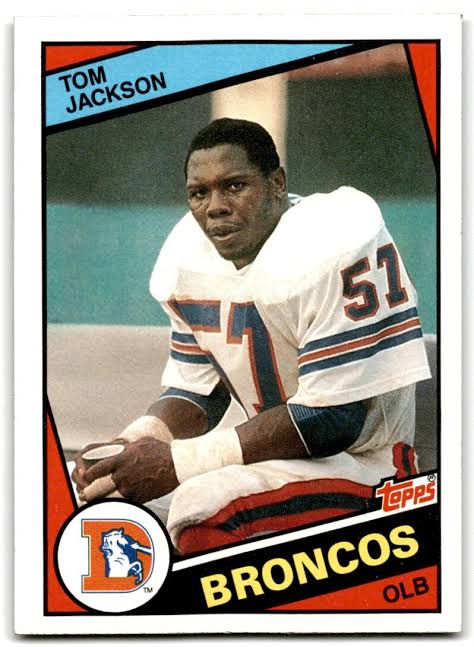 admires and sympathizes with its leader, his personal friend. “America First” has always meant Trump first.”
11.20 Tom Jackson dies at 75.
11.20 Stuart Heritage, reviewing the new series Melania in The Guardian: “[T]here is a sequence in the first episode where Melania deliberates about the exact placement of a brooch. This sequence goes on for so much longer than you would expect it to. While it was on, and she was agonising over the exact millimetre position of the brooch, I put the episode on 1.5x speed, and it still took for ever to finish. I ended up falling into a catatonic fugue state, watching it. I might still be watching it now. The show has robbed me of my capacity to discern the boundaries of time and space. Calling Melania thin gruel would be an insult to the gruel industry.”
11.20 Levent Alpöge, a mathematician at Anthropic, claimed that he used AI to prove the Riemann hypothesis, which concerns the mysterious, unpredictable structure of the prime numbers. “It is natural to feel that this is an end, in my case a loss of a principal guiding light,” wrote Alpöge. “But what I saw during the course of progress so amazed me that I believe it is one dawn across science of something far greater.”
11.19 Grand Theft Auto IV earnings top $3.79 billion on its first day of release.
11.19 Anne Applebaum in The Atlantic: “The inconsequential Trump-Putin-Xi summit in Shenzhen, pumped up by the gullible as a “Yalta 2.0,” was an event more suited for our sillier times. No serious agreements were signed. No country’s borders were redrawn on the edge of a paper napkin. No one was infected by lice or bitten by bedbugs. Instead, the meeting was brief, almost substance-free, and carefully choreographed for the maximum benefit of the Chinese hosts. Its true purpose was not to end any wars—and certainly not to end Russia’s bloody invasion of Ukraine—but to produce propaganda photographs and video clips that each of the three leaders will now use to mask their political failures.”
11.19 Martin Luther King Jr.’s handwritten draft of the speech he delivered at the historic March on Washington in 1963 was recently discovered. It will be auctioned off in January in NYC, but this week the manuscript was placed on display for the first time at the National Center for Civil and Human Rights in Atlanta. Figuring I wouldn’t get many more chances to view the essential artifact of the most important American of my lifetime, I went to see it. Written in blue ink across seven yellow legal pad pages, the speech is titled “Normalcy — Never Again,” though of course it universally known as King’s “I Have a Dream” speech. Ironically, that phrase never appears in the draft; instead, after the gospel singer Mahalia Jackson urged him to tell the crowd about his dream, King brilliantly improvised the stunning, inspirational close. A number of observers of the draft have remarked on the crossed-out words and revisions, commenting on how hard King and his associates worked to get the language right. No doubt, but I was also blown away by the many places where the sentences flowed onto the page without revision, which I took as evidence of King’s astonishing eloquence.
As I stood at the display, several young men–teenagers–talked about how they couldn’t read King’s handwriting. They agreed that it was impossible. “Excuse me, sir,” one said to me, “can you read it?” Sure, I told them, and read a couple lines. I felt like an emissary from ancient Egypt, deciphering the Rosetta Stone. https://www.youtube.com/watch?v=206eIntV6Ho
11.18 Asked on a podcastwhat Baltimore is best at making, Ravens cornerback Marlon Humphrey said “They’re best at making criminals.”
11.18 Elon Musk, quoted in The Atlantic: “I’m not MAGA. I’m not sure what MAGA means. . . I don’t think I have, like, any kind of extreme political views.”
11.17 Axios: Here are a few of the foreseeable (and foreseen) crises that have been staring at us, many for literally decades:
- The skies: We’ve known for years that the air-traffic system relies on copper wire and floppy disks. We’ve seen and known the vulnerabilities through Democratic and Republican administrations. We’ve known the fix is expensive: $31.5 billion, Transportation Secretary Sean Duffy told lawmakers last year. At Friday night’s briefing at the White House, Duffy said: “I want $50 billion.”
- The grid: We’ve known for a long time that our electricity is delivered through an aging patchwork system vulnerable to accidents or attacks. The nonprofit power authority NERC (North American Electric Reliability Corp.) warned this spring that the system is so strained by rising energy needs from AI and humans that it could jam up or break.
- The water: Drinking and wastewater systems are old and in dangerous disrepair — a huge risk to hospitals, in particular. In July, cyberattacks hit over 30 municipal water systems in Minnesota, with Iran as a likely culprit.
- The government’s computers: Washington spends over $100 billion a year on information technology. Roughly 80% goes to keeping old systems alive. Eight of the 11 systems most in need of replacement run on dying languages like COBOL. The people who can read, write and fix them are retiring.
- The debt: We paid $1.052 trillion in interest last fiscal year. That’s more than we spent on defense. The Congressional Budget Office sees the interest doubling to $2.1 trillion in 2036. Every dollar of interest is a dollar that can’t fix another crisis on this list.
- The retirement cliff: Social Security’s retirement fund runs dry in 2032. Current law then cuts benefits by 22%, automatically. Medicare’s hospital fund follows in 2033. We have known those dates for decades, and they’ve been creeping up. Now they’re just a few years away.
- The shriveled arsenal: Rebuilding the advanced weapons we’ve burned through in the Iran war will take years. Back in May, a paper from the Center for Strategic and International Studies estimated that replacing some interceptors used heavily in the war, including Patriot and THAAD anti-missile systems, would take three years.
- The minerals: China controls 91% of the world’s rare-earth refining capacity, giving the other superpower a chokehold on vital ingredients of AI. We’re one trade war away from slowing AI and the entire economy.
11.16 Robert Pattinson is announced as the next James Bond. Charles III: “Welcome to His Majesty’s Secret Service, Mr. Bond.”