
12.31 Ron Brownstein, in conversation with Bill Kristol: “Amid all of the swirling currents that you get whenever Trump is in the White House, I really feel like, to go back to pop culture, the real message of ‘25 was “the fundamental things apply.” At various points in his career, Trump has given the impression to many that he’s repealed the laws of political gravity—that all the rules no longer apply, that all the guideposts you think are out there are just obsolete in the Trump era. Well, it turned out that ‘25, I think, reasserted all of those traditional guideposts. ‘25 told us that when people are unhappy with the economy, the incumbent president suffers. And when the incumbent president suffers, his party gets a cold, to borrow the old phrase.
And basically, those two pillars of historic political gravity held in ‘25. Trump’s approval rating fell over the course of the year, as most Americans concluded that: A, he had failed to deliver on his core promise in ‘24, which was to get their cost of living under control; B, they thought he was slighting it in terms of other issues that he was more worried about; and C, they thought that, to the extent that he was paying attention to it, his agenda was making things worse, not better. He was compounding, not solving, the problem. And as a result, his approval rating on the economy fell to depths that he never reached in his first term, even during the depths of COVID. His approval rating on the economy now is lower, and his disapproval rating is higher, routinely, than it ever was at any point in his first term.”
12.31 Susan B. Glasser in The New Yorker: “[T]he biggest disappointment of 2025 may well have been not what Trump did but how so many let it happen. Trump has always been a mirror for other people’s souls, an X-ray revealing America’s dysfunction. If this was a test, there were more failing grades than we could have imagined. On the first day of his second term, the President pardoned more than fifteen hundred violent rioters who sacked their own U.S. Capitol on January 6, 2021, in a vain effort to overturn Trump’s 2020 election defeat. Even his Vice-President, J. D. Vance, had said that this was something that “obviously” shouldn’t happen; Trump’s chief of staff, Susie Wiles, later admitted that she had lobbied him not to go that far. But Trump didn’t listen. He was putting America on notice. The first outrage was a sneak preview of those to come: if there was a choice to be made, he would invariably opt for the most shocking, destructive, or corrupt option. And who was going to stop him? This is why any obituary for 2025 requires a special shout-out to those whose craven folding to Trump might well have proved to be among the biggest bad surprises of the year—the law-firm managing partners and corporate executives and technology tycoons who decided to pay protection money to the President rather than stand up for the rule of law that enabled their great success in the first place.”
12.31 The Wounded Generation: Coming Home After World War II, by David Nasaw
 12.30 Ulysses S. Grant, during his later years: “If we are to have another contest in the near future of our national existence, I predict that the dividing line will not be Mason and Dixon‘s but between patriotism and intelligence on the one side, and superstition, ambition and ignorance on the other.”
12.28 Brigitte Bardot dies at 91.
12.25 Heather Cox Richardson: “[I]n Meditations in an Emergency, Rebecca Solnit noted that it seems “clear that there is likely something in the files that further incriminates” Trump, an observation with which scholar of authoritarianism Timothy Snyder agreed. He added: “Horrible as the facts at hand are, there must be something else, something verging on the unimaginable.” The slow drip of the Epstein files, Solnit writes, is “undermining loyalty to Trump as nothing else has, and it is an important part of how the Trump regime and the Republican Party are falling apart before our eyes. This does not mean that the Trumpists are powerless,” she continues, but “Trump appears to be disintegrating, rotting, collapsing before our eyes, mentally and physically, and Republicans in Congress—first of all with the vote to release the Epstein files—are breaking from him.”
12.25 Trump on Truth Social and X: “Merry Christmas to all, including the Radical Left Scum that is doing everything possible to destroy our Country, but are failing badly,”
 12.25 The Joys of Christmas
12.24 Bob Dylan, quoted in The New Yorker, about Willie Nelson: “How can you make sense of him? How would you define the indefinable or the unfathomable? What is there to say? Ancient Viking Soul? Master Builder of the Impossible? Patron poet of people who never quite fit in and don’t much care to? 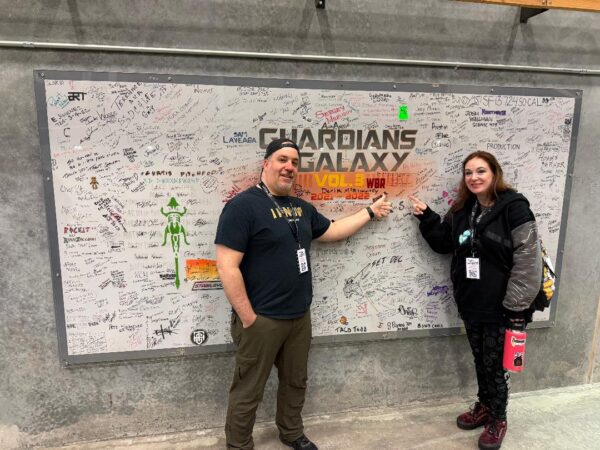 Moonshine Philosopher? Tumbleweed singer with a PhD? Red Bandana troubadour, braids like twin ropes lassoing eternity? What do you say about a guy who plays an old, battered guitar that he treats like it’s the last loyal dog in the universe? Cowboy apparition, writes songs with holes that you can crawl through to escape from something. Voice like a warm porchlight left on for wanderers who kissed goodbye too soon or stayed too long. I guess you can say
  all that. But it really doesn’t tell you a lot or explain anything about Willie. Personally, speaking I’ve always known him to be kind, generous, tolerant and understanding of human feebleness, a benefactor, a father and a friend. He’s like the invisible air. He’s high and low. He’s in harmony with nature. And that’s what makes him Willie.”
 12.23 Toured Trillith Studios with Molly and Shawn. FYI, this is Wakanda.
12.23 Jonathan Lemire in The Atlantic: “As 2025 draws to a close, Trump seems a whole lot smaller. His party has been battered in recent elections. His poll numbers on even his signature issues—the economy, immigration—have tumbled. He’s seemingly lost touch with what got him elected, instead focusing on projects both petty and self-aggrandizing. As Americans worry about affordability, Trump and his family have profited wildly from his time in office. Republicans have begun to openly and repeatedly defy him. Democrats have started to outmaneuver him. Today, the Jeffrey Epstein scandal once more erupted with embarrassing revelations and unanswered questions. And every now and then, Trump seems to have a hard time even staying awake. Every president is inherently a lame duck the moment he takes the oath of office for the second time. But many presidents have been at least able to delay their diminishment until after the midterm elections, at which point—political capital largely exhausted, the political world turning to the race to pick a successor—they tend to focus on things over which they still have control, such as foreign policy and legacy building. Remarkably, Trump, not even a full year into his second term, seems to have already gotten there.”
12.17 Trump addresses the nation. Tom Nichols in The Atlantic: “Americans saw a president drenched in panic as he tried to bully an entire nation into admitting he’s doing a great job. For 20 minutes, he vented his hurt feelings without a molecule of empathy or awareness. Economic concerns? Shut up, you fools, the economy is doing fine. (And if it isn’t, it’s not his fault—it’s Joe Biden’s.) Foreign-policy jitters? Zip it, you wimps, America is strong and respected. In effect, Trump took to the airwaves, pointed his finger, and said: Quiet, piggy.”
12.17 Mediabistro: “Reiner was one of the last of his kind – a guy whose work not only filled seats (at least for a good couple of decades) but also actually shaped how a lot of us understand storytelling, character development, and comedic timing. Reiner’s films feel like a relic – they assume that the audience is as smart as the characters on the screen, and every bit as invested (without a lot of heavy-handed exposition or pandering voiceovers). His works trusted the power of tone, and believed that the characters and the worlds they inhabit matter more than some studio algorithm. . . .Reiner taught us that accessibility and sensibility weren’t enemies, and that the best written characters in film offer the kind of insight and understanding into human nature (and the state of the world) that no other medium can replicate. . . .Reiner’s work is worth thinking about this week, if only because one quick glance at the media business headlines this week seem to be trending in the exact opposite direction. You want the truth? You can’t handle the truth. Because the truth is, these stories from the last week suggest that the entertainment industry is moving in a direction that’s got a lot to do with industry, and precious little to do with entertainment.”
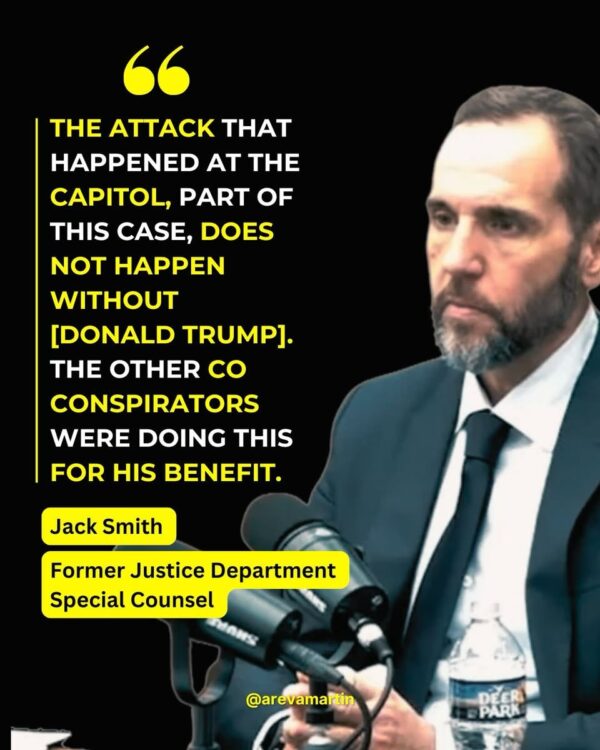 12.16 Jack Smith testifies before the House Judiciary Committee.
12.16 Norman Podhoretz dies at 95.
12.16 In an article in Vanity Fair by Christopher Whipple, White House chief of staff Susie Wiles suggested Trump had “an alcoholic’s personality” because he operates with “a view that there’s nothing he can’t do. Nothing, zero, nothing,” adding that her experience with her father, Pat Summerall, the legendary sportscaster and alcoholic, made her “a little bit of an expert in big personalities”; said she had urged him not to pardon the most violent rioters from the Capitol attack on Jan. 6, 2021, which he ended up doing; said she had tried to get him to hold off announcing the hefty tariffs in the spring because of a “huge disagreement” on his team, but he went ahead and did that too; said she had urged him to end the “score settling” against his political enemies after 90 days, an idea that clearly did not work; said that Vice President JD Vance had “been a conspiracy theorist for a decade,” called Russell T. Vought “a right-wing absolute zealot, ” and called Elon Musk “an odd, odd duck” and “an avowed ketamine” user; acknowledged that Trump’s named appeared in the Epstein files and said Pam Bondi “completely whiffed” on her handling of the files. On the respective evolutions of JD Vance and Marco Rubio from sharp critic to key deputy, Wiles said “Marco was not the sort of person that would violate his principles. He just won’t. And so he had to get there.” As for Mr. Vance, “his conversion came when he was running for the Senate. And I think his conversion was a little bit more, sort of political.”
12.14 Jonathan Martin in Politico: “As for 2028, it’s particularly important that Republicans have a candidate willing to force the big tech question into the campaign. That’s because the Trump White House has taken such a laissez-faire approach toward AI and really any check on the Silicon Valley titans. It has let crypto companies run rampant while the Trump family cashes in, allowed Nvidia to sell chips to China (thus giving up our best advantage in the AI race), and generally offered tech moguls carte blanche so long as they pay tribute to Mr. Trump. The administration is not only not wrestling with a great dilemma of our times —  they’re acting like it doesn’t exist. Add it all up — AI’s impact on jobs and power bills, plus the phone’s impact on kids — and you can see the wave of backlash building.”
12.14 Rob Reiner and his wife are murdered in Hollywood. His son has been arrested.
12.14 At age 44, Philip Rivers comes out of retirement to start as quarterback for the Colts. Rivers went 18 of 27 for 140 yards with a touchdown and an interception, and nearly led the Colts to an upset victory. He became the first grandfather to play in the NFL.
12.14 Two extremist gunmen, a father and son, killed at least 15 people in a mass shooting at a Hanukkah celebration on Bondi Beach in Sydney, Australia. At least 42 people have been hospitalized.
12.13 A gunman opened fire in an economics class at Brown University, killing two students and wounding nine others.
12.13 Robert J. Samuelson dies at 79.
12.12 A note from Dave Dawson: “I was at the Academy last Saturday participating in the Distinguished Grad Selection Committee. LtGen Mike Borgschulte USMC, the new Superintendent, sat next to me at the session and during a break in the meeting we had the chance to discuss his desire to increase assessment of grit, tenacity, and resilience during new candidate admissions process. I told him he should include audacity in that list and mentioned Cushing and your book. He did not know Cushing’s story and was keen to hear more. I sent him a copy of your book this week and I’m certain he will dive in over the holiday break. I thought you’d be interested… your book continues to influence!! Go Navy – Beat Army! Dave
12.11 National Constitution Center seminar on William F. Buckley and the History of American Conservatism, with Matthew Continetti and Sam Tanenhaus
12.11 CNN Nightcap: “Donald Trump has a few tried-and-true rhetorical strategies. He invokes what “many people are saying” when he needs to make an unsubstantiated claim. He riffs on nicknames for his political enemies. And he repeats a talking point relentlessly, hoping it’ll stick in people’s minds. . . .But no matter how many times he says he’s created the best economy in history, there is one often-overlooked economic indicator, known as the “quits” rate, that simply cannot be browbeaten into reality. “I have no higher priority than making America affordable again,” he said at a rally in the Poconos, before immediately launching into grievances against his Democratic predecessor. “Again, they caused the high prices!” In another moment of almost staying on message, Trump repeated the claims that his administration “inherited the worst inflation in the history of our country” (it didn’t) and that his policies are bringing prices down (also false). But even those broad statements were bookended by attacks that “their entire agenda is about robbing working people to… give lavish benefits to foreign migrants and illegal aliens.” As my colleague Aaron Blake notes, the president “made it abundantly clear – for the umpteenth time – that he’d prefer to pretend that this very real and very politically problematic issue simply didn’t exist, rather than offer prescriptions.” My colleague Zach Wolf described it as Trump’s “Jedi mind trick of telling people everything is cheaper in the hopes they would start to believe him.” It’s not working. And Trump should understand why better than anyone. Telling people the economy is great when they say it’s lousy is a big part of what cost Democrats the 2024 election and catapulted Trump, who campaigned on a promise of economic prosperity, back into the Oval Office. . . .On Tuesday, we got the October “quits rate” — a closely watched measure of workers’ willingness or ability to leave their jobs. If the economy’s good, people quit their jobs more readily, on the assumption that they can find a new one pretty easily. But that figure fell to its lowest level since May 2020, suggesting people aren’t confident a better job is out there. In some ways, the quit rate can tell us what voters may not admit to even themselves — that when it comes right down to it, they’re white-knuckling their steady gig because they’re worried about the economy. Tuesday’s Job Opening and Labor Turnover Survey, known as JOLTS, showed there were slightly more jobs available this fall than economists expected (a good sign) but layoffs were also beginning to tick higher and hiring was sluggish (not great signs) In the K-shaped economy, the labor market has taken on the dynamic of a fancy airport lounge. As Noah Yosif, chief economist at the American Staffing Association, says “Those on the inside, they’re doing pretty well; but for those on the outside, it’s getting harder and harder to break in.”
12.11 Theodore R. Johnson in the Washington Post: “Half of Black immigrants in the U.S. are from the Caribbean. More than half of Black immigrants have arrived since 2000, and those from Africa are the fastest-growing cohort and the primary source of the group’s present population growth. About a third of Black immigrants hold college degrees, matching the percentage of all immigrants. Their household income is 30 percent higher than the native Black population, and they are just as likely to own a home. A recent paper from the National Bureau of Economic Research finds that it’s this group that’s narrowing the earnings gap between White and Black Americans. Some of this has benefited Trump. Studies show that Black immigrants are typically more conservative, have less connection to political parties and conceive of racial identity differently than native Black Americans. This contributed to Trump’s near-doubling of Black support in the 2024 presidential election. Working-class resentments and labor competition have increased Black support for restrictive immigration policy, a hallmark of Trump’s campaign. And in Minneapolis, he performed better in neighborhoods with large Somali populations in the 2024 election than in 2020. But now, his administration is targeting those same communities, disproportionately deporting Black immigrants. Misunderstanding the changing face of Black America means that well-laid plans are sure to result in unintended consequences. Politicians devising strategies that rely on a monolithic Black America with uniform policy preferences — such as partisan gerrymandering — may end up in a worse political position. For all the differences in a diversifying Black America, studies also find that the longer Black immigrants are in the U.S., and subjected to racial inequality, the more likely they are to develop solidarity with African Americans. A recent study from the health research nonprofit KFF reveals the prevalence: Black immigrants report experiencing discrimination in housing, at work and during hospital visits — more than Hispanic, Asian and White immigrants.”
12.9 Injustice : How Politics and Fear Vanquished America’s Justice Department, by Carol Leonnig and Aaron C. Davis
12.9 David A. Graham in The Atlantic: “What was most troubling about Biden, however, was not his age per se, but its symptoms: the stiffness, the apparent fatigue, and especially the meandering answers he delivered during his debate with Trump in June 2024. The same is true of Trump now. If another president were in his 50s or 60s and seemed unable to remember the details of such an important story as the boat strikes, didn’t know why he’d had a lengthy medical examination, and appeared to routinely doze off during high-profile meetings, the public would have understandable questions about his capacity to do the job. Trump has never displayed the temperament to serve as president, and now he is showing signs that he’s lost the physical stamina too.”
12.8 David A. Graham in The Atlantic: “The [pipe bomb] suspect, Brian Cole Jr., reportedly recently told investigators that he was a Trump supporter who believed Trump’s bogus claims of fraud in the 2020 election. But various people in conservative media and politics have insisted for years that the pipe bombs were actually planned or placed by the government in order to make Trump look bad—which was why no one had been apprehended. One of the most prominent backers of that claim was the podcaster and radio host Dan Bongino. Even the Fox News host Sean Hannity, one of the administration’s most sycophantic pundits, had to point this out during an interview, noting that before joining the FBI, Bongino had called the bombs an “inside job.” Bongino’s answer was astonishing. “I was paid in the past, Sean, for my opinions, that’s clear, and one day I will be back in that space—but that’s not what I’m paid for now,” he said. “I’m paid to be your deputy director, and we base investigations on facts.” Some liberal critics have been braying for years that the conservative press is full of hacks who will say anything in order to froth up their audience, regardless of truth. (Rage bait isn’t just the word of this year.) This criticism can feel shamelessly partisan and uncharitable. And yet, here Bongino is, blithely admitting that in his case, the critics are right: He was saying things he didn’t have evidence for and maybe didn’t even believe. . . .This isn’t the first time that Bongino’s prior pundit life has complicated his current role as No. 2 at the FBI. While working as a podcaster, Bongino frequently discussed Jeffrey Epstein and questioned the official narrative about his prosecution and death, which was ruled a suicide. Since joining the FBI, however, he has endorsed many of the claims he ridiculed. Nor is this the first time that a major conservative figure has admitted that they’re just making stuff up. In 2019, a woman who alleged a sexual relationship with Trump sued Fox News for defaming her by accusing her of extorting the president. Fox News’s lawyers argued—and convinced a judge—that the then-host Tucker Carlson couldn’t be held liable, because he was not “stating actual facts” and instead engaging in “exaggeration” and “non-literal commentary.” There are other words for this. Lying is one of them.”
12.8 Megan McArdle in the Washington Post: “[E]verything about the [feature film] is optimized for theaters: its visual language, its lavish production budgets and even its length (long enough to be worth leaving the house for, not so long that your butt goes numb). In the future, storytelling will be optimized for streaming into our living rooms — unless, of course, it’s optimized for YouTube and TikTok, or some other technological medium I can’t yet imagine. I understand Hollywood’s sadness and trepidation and anger about losing such a culturally central art form. I, too, feel that something will be irretrievably lost. But that denouement is coming even if antitrust regulators block the deal — heck, even if Congress outlaws movie streaming. Inflation-adjusted domestic box office revenue is down 40 percent since 2019, and the alternative to our new mega-streamer isn’t that people go back to the theaters. It’s that they turn to whatever else is on their small screens: video games, YouTube, TikTok. At least Netflix is in the business of paying creators to do scripted storytelling, even if it’s not the kind of storytelling they’d most like to be doing, or as lucrative as it used to be. Though streaming lacks some of the grandeur of film, it enables some things that were hard or impossible in feature films or on network television: longer story arcs, niche genres and deeper character studies. That may feel like poor compensation to those who would rather watch (or make) a movie. But at least visual storytelling will survive, even if the feature film doesn’t.”
12.7 Anthony Hopkins: “It’s none of my business what people say of me, and think of me. I am what I am, and I do what I do. I expect nothing, and accept everything. And it makes life so much easier.”
12.6 A New Jersey-bound JetBlue Airbus A320 that suddenly plunged thousands of feet in the air in October — sending 15 people to the hospital— was likely struck by a stream of high-energy particles from a distant supernova blast that exploded in another galaxy and traveled millions of years cosmic rays to get here, according to Clive Dyer, a space and radiation expert from the University of Surrey who spoke to space.com.
12.5 Frank O. Gehry dies at 96.
12.5 Netflix to buy Warner Bros. Discovery in $83 billion cash-stock deal
12.4 Jonathan Martin in Politico: “Trump is living his best life in this second and final turn in the White House. Coming up on one year back in power, he’s turned the office into an adult fantasy camp, a Tom Hanks-in-Big, ice-cream-for-dinner escapade posing as a presidency. The brazen corruption, near-daily vulgarity and handing out pardons like lollipops is impossible to ignore and deserves the scorn of history. Yet how the president is spending much of his time reveals his flippant attitude toward his second term. This is free-range Trump. And the country has never seen such an indulgent head of state. Yes, he’s one-part Viktor Orbán, making a mockery of the rule of law and wielding state power to reward friends and punish foes while eroding institutions. But he’s also a 12-year-old boy: There’s fun trips, lots of screen time, playing with toys, reliable kids’ menus and cool gifts under the tree. . . .Yet, as with all children, there are also outbursts in the middle of restaurants. Or in this case, the Cabinet Room. After weeks of GOP pleading with him to address the cost of living following the Democratic rout last month, Trump this week used a Cabinet meeting to belittle “affordability,” calling his party’s central political challenge “a con job” and “fake narrative.” Then there is Trump’s play-time schedule. He not only goes to a Yankees game on Sept. 11, he ducks into the locker room afterward to pal around with stars a half-century younger, still the Queens kid whose first sports memories were of Willie, Mickey and the Duke. Same as at the Ryder Cup, at Bethpage on Long Island: Trump didn’t just show up to take in some golf, he walked up to the first tee with former PGA great Bryson DeChambeau. Didn’t know Trump was a big soccer guy? Neither did I. But there he was at the Meadowlands in New Jersey at the FIFA Club World Cup in July, standing alongside Chelsea FC and baffling the English club’s players as they celebrated while the American president remained on stage. And it wasn’t enough for the president to pop over to suburban Maryland last month for the Commanders-Lions game. He also had to duck into the broadcast booth to get some airtime with the Fox Sports crew and also have Air Force One execute a flyover above the stadium. Of course, part of these outings goes with the office, and presidents have long played the role of first fan. But Trump’s cavorting goes well past sports. A celebration of the U.S. Navy’s 250th anniversary in Norfolk becomes an excuse to preen on an aircraft carrier and commandeer the ship’s PA system to do a now-hear-this riff, as if Chris Farley had come back to life and was doing a Trump bit. Any excuse to hang out with the celebrities who will be seen with him is taken, whether it’s Sly Stallone, Kid Rock or Andrea Bocelli crooning in the Oval. And hey, isn’t that Vince Vaughn? Not surprisingly, companies and countries have figured out what animates Trump, same as every adolescent: presents. So the Brits present a gilded invitation to Windsor Castle, the Qataris offer a tricked-out plane and most every other country pitches their golf courses whenever he wants to come. And these nations know not to serve him foie gras. Catering to Trump’s forever-young palate, the South Koreans offered beef patties with ketchup and gold-embossed brownies to the American president in October.”
12.4 James Gleick in NYRB: “The early Internet thrived on cutting out the middleman. If people complained about the markup charged by their brick-and-mortar bookstore, the upstart Amazon promised to eliminate the overhead of shelf space, store rents, and clerk salaries and deliver the merchandise straight to their front door. Or straight to the eyeballs—cut out the printers and paper mills, too. The buzzword was disintermediation. Another master of disintermediation was eBay, connecting buyers and sellers directly, cutting out the antique dealers and flea markets. Napster did the same for music lovers, cutting out the record stores; it began enabling song downloads in 1999, operated for a year and a half, claimed 80 million users, and devastated the recording industry. And now? The platforms are middlemen par excellence. They squeeze buyers and sellers alike. Music streaming services like Spotify and Apple Music say they aim to connect artists with their fans, helping music lovers find the music they love and helping creators find a livelihood; instead they use their centralized control to pay artists less than ever. Google and Facebook, dominating the global advertising market, have colluded to raise prices for advertisers while minimizing the revenue to websites that publish the ads. [Cary] Doctorow’s warning is urgent and his analysis is trenchant. Enshittification, as he sees it, has three stages. First, a platform needs to lure users. They provide real value to customers, free of charge, taking losses as necessary. Google offered a truly revolutionary search engine, a portal that seemed to fulfill the best of Berners-Lee’s vision. Facebook let users build communities. Twitter, when it began, was playful and fun, Doctorow writes: “It was a party the whole world was invited to.” Stage one, per Doctorow, is “good to users.” Stage two is “good to business customers.” When Apple had sold enough iPhones, it could offer developers a ready market for its new App Store. The feedback loop of network effects kicked in: every new app in the App Store made the iPhone more attractive to users; every iPhone sold made the App Store more attractive to app developers. On social media, the business customers were those willing to pay to get their message into the feeds of users who had previously been able to control their own information experience. Facebook (“We will never spy on you”) monitored its users’ every click and expropriated the content they posted. In economic terms, it clawed back surplus from users and sold it to business customers. In stage three, the business customers are squeezed in turn; the platform uses its access to their information to claw back surplus for itself. Amazon clones products sold by its merchants and undercuts their prices. It charges merchants fees to appear in searches—$38 billion a year for search placement alone. That, in turn, poisons the user experience. As Doctorow writes: “On average, the stuff at the top of an Amazon search results page is bad. It’s low-quality, high-priced junk…. The top-scoring items with the highest user ratings are often terrible but are garlanded with (paid) rave reviews.”’
12.4 Jonathan Martin on Morning Joe: “I talked to a former GOP senator. He said two words to me: filing deadlines. Why do filing deadlines matter? Because what the senator was talking about was the filing deadlines for primaries next year. Which is to say, when that clears, when that passes, when these lawmakers know who is or is not running against them in primaries next year, then you’ll see even more freedom, even more independence.”
12.3 Steve Cropper dies at 84.
12.2 George Will in the Washington Post: “Defense Secretary Pete Hegseth seems to be a war criminal. Without a war. An interesting achievement. . . .The killing of the survivors by this moral slum of an administration should nauseate Americans. A nation incapable of shame is dangerous, not least to itself.”