
9.30 Tom Nichols in The Atlantic: “Pete Hegseth’s convocation of hundreds of generals and admirals today turned out to be, in the main, a nothingburger. . . . The assembled military leaders likely already knew that Hegseth is unqualified for his job, and they could mostly tune out the sloganeering that Hegseth, a former TV host, was probably aiming more at Fox News and the White House than at the military itself. What they could not ignore, however, was the spectacle that President Donald Trump put on. . . [T]he generals and admirals should be forgiven if they walked out of the auditorium and wondered: What on earth is wrong with the commander in chief? Trump seemed quieter and more confused than usual; he is not accustomed to audiences who do not clap and react to obvious applause lines. “I’ve never walked into a room so silent before,” he said at the outset. (Hegseth had the same awkward problem earlier, waiting for laughs and applause that never came.) The president announced his participation only days ago, and he certainly seemed unprepared. . . .Trump started rambling right out of the gate. “Just have a good time. And if you want to applaud, you applaud. And if you want to do anything you want, you can do anything you want. And if you don’t like what I’m saying, you can leave the room. Of course, there goes your rank; there goes your future.” Laughs rippled through the room.”
 9.30 Trump, to senior military leaders: “We’re under invasion from within. No different than a foreign enemy, but more difficult in many ways because they don’t wear uniforms. At least when they’re wearing a uniform you can take them out. It’s war from within.”
9.29 Paris Fashion Week
9.29 Lally Weymouth dies at 82.
9.28 Into Sunderland Circle
9.26 Depart Clifton Park.
9.27 Depart Paris
9.27 James Comey is indicted for making a false statement and for obstructing a congressional proceeding. He made the allegedly false statement – denying he had authorized anyone at the FBI to anonymously leak to the media – while testifying before a Senate committee in September 2020 about the FBI’s probe into Russian interference in the 2016 election.
9.23 Claudia Cardinale dies at 87.
9.21 Stephen Miller, euglogizing Charlie Kirk: ``They cannot imagine what they have awakened. They cannot conceive of the army that they have arisen in all of us. Because we stand for what is good, what is virtuous, what is noble. And to those trying to  incite violence against us, those trying to foment hatred against us, what do you have? You have nothing. You are nothing. You are wickedness. You are jealousy. You are envy. You are hatred. You are nothing. You can build nothing. You can produce nothing. You can create nothing. We are the ones who build. We are the ones who create. We are the ones who lift up humanity. You thought you could kill Charlie Kirk? You have made him immortal.”
9.21 Bernie Parent dies at 80.
9.20 Trump to Pam Bondi on Truth Social: “Pam: I have reviewed over 30 statements and posts saying that, essentially, “same old story as last time, all talk, no action. Nothing is being done. What about Comey, Adam “Shifty” Schiff, Leticia??? They’re all guilty as hell, but nothing is going to be done.” Then we almost put in a Democrat supported U.S. Attorney, in Virginia, with a really bad Republican past. A Woke RINO, who was never going to do his job. That’s why two of the worst Dem Senators PUSHED him so hard. He even lied to the media and said he quit, and that we had no case. No, I fired him, and there is a GREAT CASE, and many lawyers, and legal pundits, say so. Lindsey Halligan is a really good lawyer, and likes you, a lot. We can’t delay any longer, it’s killing our reputation and credibility. They impeached me twice, and indicted me (5 times!), OVER NOTHING. JUSTICE MUST BE SERVED, NOW!!! President DJT
9.16 Robert Redford dies at 89.
9.14 Eddie Giacomin dies at 86.
9.13 To Paris
9.10 Charlie Kirk, 31, is assassinated.
9.8 Rachael Bade in Politico: “A private dinner attended by dozens of administration officials and close advisers to President Donald Trump was temporarily marred by a dramatic clash between two of Trump’s top economic officials, with Treasury Secretary Scott Bessent at one point threatening to punch top housing finance official Bill Pulte “in the fucking face.” The Wednesday evening event was supposed to be one of celebration: It was both the much-anticipated inaugural dinner at Executive Branch, the ultra-exclusive Georgetown club created by and for Trump world’s uberrich, and a birthday party for MAGA-friendly podcaster Chamath Palihapitiya. A long table for the 30-some guests was set with top-of-the-line crystal and china. The guest list included Transportation Secretary Sean Duffy, Commerce Secretary Howard Lutnick, Interior Secretary Doug Burgum, Agriculture Secretary Brooke Rollins, Director of National Intelligence Tulsi Gabbard, SBA Administrator Kelly Loeffler, Medicare and Medicaid chief Mehmet Oz, plus venture capitalist David Sacks, Palihapitiya’s partner on the “All In” podcast. But amid the cocktail-hour din, Bessent lashed out at Pulte in an expletive-laden diatribe. The Treasury secretary had heard from several people that the Federal Housing Finance Agency director had been badmouthing him to Trump, a person close to him said. He wasn’t about to engage in chit-chat as if nothing was amiss. “Why the fuck are you talking to the president about me? Fuck you,” Bessent told Pulte. “I’m gonna punch you in your fucking face.” The scene was described to me by one eyewitness and four other people familiar with what happened. The only fact they disagreed on was whether it was Bessent or Pulte who initiated the conversation. They and others who described the conflict were granted anonymity due to the sensitivity of the situation. Pulte appeared stunned, and the tense encounter prompted club co-owner and financier Omeed Malik to intervene, according to the three people. But Bessent wasn’t having it — he sought to get him kicked out, the eyewitness said. “It’s either me or him,” Bessent said to Malik. “You tell me who’s getting the fuck out of here.” “Or,” he added, “we could go outside.” “To do what?” asked Pulte. “To talk?” “No,” Bessent replied. “I’m going to fucking beat your ass.”
9.8 Greg Berman and Josh Greenman in The Washington Post: “New York’s mayoral race may be chaotic, but the city itself is thriving. On crime, education, sanitation, transportation and jobs — all traditional metrics mayors are judged on — things are largely heading in the right direction. This mini-renaissance is an underappreciated backdrop to the rise of Democratic front-runner Zohran Mamdani. Ironically, he has benefited more from the city’s relative health than has Mayor Eric Adams, whose petty scandals and perceived alliance with President Donald Trump (including rumors of an administration job) have him polling a distant fourth in a four-way race while running as an independent. If New York were truly in crisis — Fortune 500 companies leaving, population declining, violent criminals running amok on the streets — voters would be far less likely to take a chance on a 33-year-old neophyte with fewer than five years of experience in the state legislature and only three passed bills to his name. Former governor Andrew M. Cuomo’s campaign in the Democratic primary sputtered in part because his depiction of a city aflame, and in need of a strongman to fix it, felt out of step with reality. Mamdani may have run against the status quo, but his rhetoric, videos and vibe tapped into New Yorkers’ optimism. As the late Dorothy Parker put it, the city always “believes that something good is about to come off, and it must hurry to meet it. Even Mamdani’s signature campaign issue, the need to improve affordability for New Yorkers, is in part a sign of the vitality of the city. The exorbitant price of housing is mostly a function of supply and demand, and the supply of people who want to live in the city greatly exceeds the number of homes available. This is a powerful indicator that New York remains an attractive destination.”
9.8 WSJ: Lawyers for Jeffrey Epstein’s estate have given Congress a copy of the birthday book put together for the financier’s 50th birthday, which includes a letter with Trump’s signature that he has said doesn’t exist.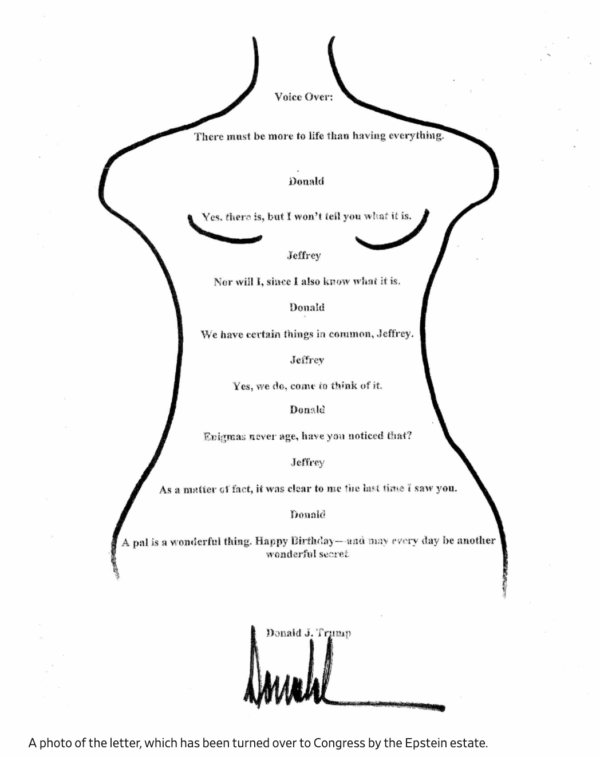
9.8 Max Boot in the Washington Post: “Trump’s executive order renaming the Department of Defense as the Department of War is a perfect encapsulation of how he employs the military. It’s gimmicky and newsworthy, it prioritizes style over substance — and pushes the legal limits of presidential power. The “Department of Defense” was named by Congress in 1949, so it can’t be changed by executive order. Trump’s directive portrayed the change as a “secondary title” for the Department of Defense and urged Congress to make the change official, but Defense Secretary Pete Hegseth isn’t waiting for legislative authorization to rebrand himself. The switch in 1949 wasn’t made because the armed forces went “wokey” and stopped winning wars, as Trump alleged. The old Department of War had been solely in charge of the Army. The new name was for an expanded agency that also included the Navy, Marine Corps and Air Force. But while renaming the Defense Department is pointless and wasteful — new signage could cost millions of dollars — it is not nearly as troubling as the uses to which Trump puts the military. The president is employing the armed forces ostensibly to fight crime at home and drug smuggling abroad. In the process, however, he is pushing military personnel into dangerous and uncharted legal waters — and, ironically, moving them further away from fighting actual wars.”
9.6 Bill Parcells in The Athletic: “It’s hard to put the emotion into words as far as what the Giants mean to me, and that’s the truth. When they win, I’m happy, and when they lose, I’m not happy, and that’s been going on for 75 years.”
9.5 Caught Stealing
9.5 Ken Dryden dies at 78.

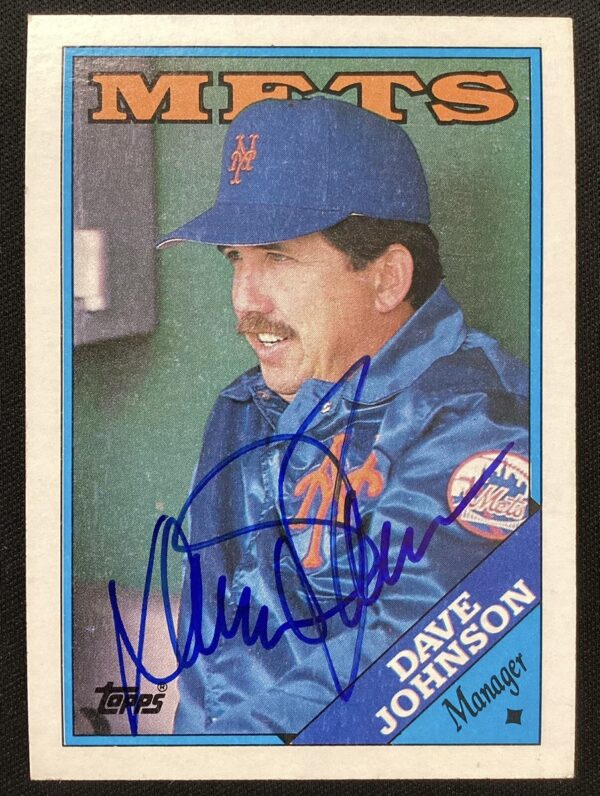 9.5 Davey Johnson dies at 82.
9.4 Robert Jay Lifton dies at 99.
9.3 Honey Don’t
9.2 Thomas B. Edsall in the Times: “An 8,000-word report issued by the Center for American Progress, “Trump’s First 100 Days: Creating an Imperial Presidency That Harms Americans,” captured the scope of Trump’s teardown of American democracy. “President Donald Trump,” wrote the report’s two authors, Michael Sozan and Ben Olinsky, “is aggressively implementing a far-right, multipronged plan to create an imperial presidency. Acting far more aggressively than he did in his first term, Trump is casting aside the U.S. Constitution and federal laws, shattering long-established guardrails designed to protect the system of checks and balances and using government power to stifle dissent.” The authors added that Trump “is asserting his primacy over Congress, the courts, the federal bureaucracy, the media, universities and civil society, while incorporating elements of oligarchy and systemic corruption. Without more pushback against Trump’s unprecedented power grab, the United States could ultimately resemble modern autocracies around the world, such as Hungary and Turkey, with Americans’ safety, prosperity and fundamental rights suffering the consequences.” It is an asymmetric struggle without precedent in American political history, creating a predicament for all those opposed to a president who acts without regard to law, constitutional limits or congressional authorization, who disdains due process, prosecutes political adversaries and weaponizes regulatory agencies to attack the media, academia, the legal profession and liberal democracy itself. While Trump thrives on the wreckage he leaves in his wake, he is guided by Russell Vought, head of the Office of Management and Budget, and Stephen Miller, the White House deputy chief of staff for policy and homeland security adviser. Vought and Miller are coldblooded, ideologically driven strategists who have spent nearly a decade developing the foundations for this MAGA takeover of what was once a familiar American way of life. Vought has declared that his primary goal is to “bend or break the bureaucracy to the presidential will.” Paul Winfree, a deputy assistant to the president for domestic policy in the first Trump administration, told Politico, “Russ knows how to manage both up and down, and he also knows how to use the levers of government and how to think more broadly about legislative strategy and working with Congress, basically the way that things get done in this town.” Winfree added, “He is a master at this.” I asked Steven Pinker — a cognitive psychologist at Harvard, where he has been in the forefront of debates over university reform and the Trump administration’s attacks on the university — for his assessment of the power imbalance between Trump and his adversaries: “The shock in the second Trump administration,” Pinker wrote, “is how ruthlessly organized the movement became during the four-year interregnum. This time his administration was prepared with surgical strikes on all the zones of resistance. Apparently this planning came from the architects of Project 2025. The resistance appears to have no corresponding defensive plan.” Pinker stressed his view that “The coordinated defense of democracy has to come not just from the center to the left, but from the center-right to the left, including the Never Trumpers, Project Lincolners, Weekly Standard refugees, National Review holdouts, Andrew Sullivan readers and so on.” The conservative Heritage Foundation’s Project 2025, Pinker noted, “was accompanied by an intellectual movement (national conservatives, integralists, Claremonsters, Silicon Valley NRX neoreactionaries) that gave it some heft, conviction, energy and enough coherence to back up court briefs.” In contrast, “the center and center-left have not articulated a positive vision for the anti-Trump resistance other than opposition to MAGA in one direction and wokeism in the other.” Pinker, like a number of others I communicated with, was particularly critical of “the Democratic Party, which ought to be the center for this resistance but appears to be clueless, captured by its identity politicians and unable to formulate a coherent battle plan for winning elections or fighting in court.” Without an election to unify the opposition to Trump, critics of the administration face what Yale political scientist Jacob Hacker described as a “fundamental problem — one that is widely recognized yet devilishly difficult to overcome — the collective-action dilemma faced by those who would fight back against the erosion of American democracy. Donald Trump and his MAGA movement have amassed considerable coercive power; they face almost no pushback from members of the Republican Party in Congress or Republican-appointed justices on the Supreme Court (who are aligned with the MAGA movement even when they are not actively spearheading its efforts). The Democratic Party, Hacker argued, “has proved extremely ill suited to the present challenge. It is a party built for electoral and governing resilience in the face of normal political swings and inside-the-Beltway battles over often incremental policy advances. But today’s crisis calls for a broad-based organizational presence, encompassing grass-roots political activity alongside national-level mobilization.” I wrote to Bob Bauer, a professor of practice at N.Y.U. law school and a Democratic expert in the structuring and financing of political organizations, asking for his views on the strategic options available to opponents of the MAGA agenda. “There is an urgent opposition to be mounted and effectively articulated,” said Bauer. “The mechanics matter, but first must come the message: How does such a movement/organization expect to be persuasive? To build a pro-democracy coalition across party and ideological lines requires showing how democratic institutions are necessary to effective governance — and not, as Trump and allies suggest, an impediment to the meaningful change that much of the electorate is demanding. Trump has always banked on winning the “change” argument and connecting change to the imperative of norm-busting, law-skirting or law-violating governance strategies. The opposition has to meet, head-on, this pernicious claim and show how these strategies are producing failed government. Trump, Bauer wrote, is “a president who claims the right to do as he pleases without regard to rules or norms, a president who is pleasing himself. The 2024 electorate did not vote for a president’s claims of unlimited authority to start global trade wars or deploy the military in domestic law enforcement or decide who is an American. There is no reason to believe that a majority of the electorate is prepared to trade a better economy, affordable health care or good schools for a politics of revenge, insults and self-glorification in which a president can do whatever he chooses “for the good of the country” on his say-so. The Trump opposition has to be able to show the connection between governing failure and the trashing of democratic norms, values and institutions.” Princeton sociologist Kim Lane Scheppele agreed. “Yes, those opposed to autocratic capture need to organize, build infrastructure and stop being polite. Most of those who believe in democracy and the rule of law tend to put their faith in litigation and elections, and that’s what we’ve seen in the first seven months of Trump 2.0. So, Scheppele continued, “we should have organized a broadly pitched political movement long before this to push back.” If we do so now, she argued, there are crucial steps to avoid adopting autocratic practices: “I’ve worked on this in other countries, and my advice has always been: Whatever you propose to do to recover from an autocratic power grab, commit yourself to doing it with benchmarks you announce in advance to show your commitment to the rule of law. It does mean committing to a set of principles so that those who are watching — and why not commit to nonpartisan monitors — can distinguish the autocrat’s power grab from similarly disruptive actions that restore the rule of law.;; Some of the others I contacted cited the difficulties of trying to mobilize a unified opposition to Trump. Mike Lux, a founder of Democracy Partners, a political consulting firm, who is a longtime supporter of liberal causes, raised a crucial issue in an email: “To be brutally honest, I fear fragmentation less than a consolidated approach driven by the same establishment power players who have failed us before.” If you put the same kind of establishment strategists in charge, Lux added, “I would be opposed to a consolidated approach, because I think it would fail and waste a huge amount of money. That’s not to say that Lux is optimistic about the immediate future: “The Trump regime’s lawbreaking will get worse as we head into the election year. The redistricting battle is just the tip of the iceberg, in terms of the way they will throw the 2026 elections into disarray and claim the wins we do have are illegitimate.” A second criticism is that the creation of an organization does not address the imbalance of institutional power built into the system. Pat Dennis, president of American Bridge 21st Century, a pro-Democratic PAC and advocacy group that spent $97.5 million in the 2023-24 election cycle, emailed me to say: “The asymmetry is simple: Trump has more capacity to act as the leader of the government and of a party that controls both houses of Congress and a large fraction of the judiciary and media; we have less. It’s a power problem. Where we control levers, such as in California, Democrats and allied institutions have shown plenty of will to power; where we don’t, what’s been attributed to a lack of will is better attributed to a lack of ability.” Support for an encompassing organization to oversee and direct anti-Trump forces, Dennis argued, grows out of “the desire to have somebody in charge. We can all see the scope of the problems, but any one of us can only directly influence our piece of the pie. We want somebody to be looking at the whole pie and calling the shots. Some wanted the D.N.C. to fill this role. But it cannot. To me, however, that leader will inevitably come in the form of the 2028 nomination fight. In the meantime, we all need to do our part of the work as effectively, strategically and ruthlessly as we are able.” At this stage, Dennis contended, what’s “equally important is what not to do. Don’t chase a unifying policy blueprint beyond broad values; detailed planks fracture a coalition whose true adhesive is negative partisanship. A charismatic leader can build a charismatic vision; a faceless organization cannot.”
9.3 Trump is changing the name of the Defense Department to the Department of War, to better reflect its mission. In days to come, we can expect the Treasury Department to become the Department of Shakedowns, the Justice Department to the Department of Do You Feel Lucky, Punk?, the Department of Health and Human Services to the Department of Johnny, We Hardly Knew Ye, and the Department of State to the Department Putin’s Little Bitch.
9.2 Paul Krugman: “You might say that the Trump administration is suffering from a richness of embarrassments. Trump has, of course, surrounded himself with slavish sycophants. And he may imagine that the world admires him the way his hangers-on pretend to. The truth, however, is that the world sees him as a dangerous buffoon. Dangerous because he runs America, an economic and military superpower, and has a fanatically supportive domestic base. A buffoon because he’s almost surreally vain, insecure and ignorant.”
9.2 A federal judge finds that Trump‘s National Guard deployment in June exceeded legal limits, and accuses Trump of effectively turning nearly 5,000 soldiers into a national police force.
9.1 Graham Greene dies at 73
9.1 Sallyanne Harper dies at 70.